
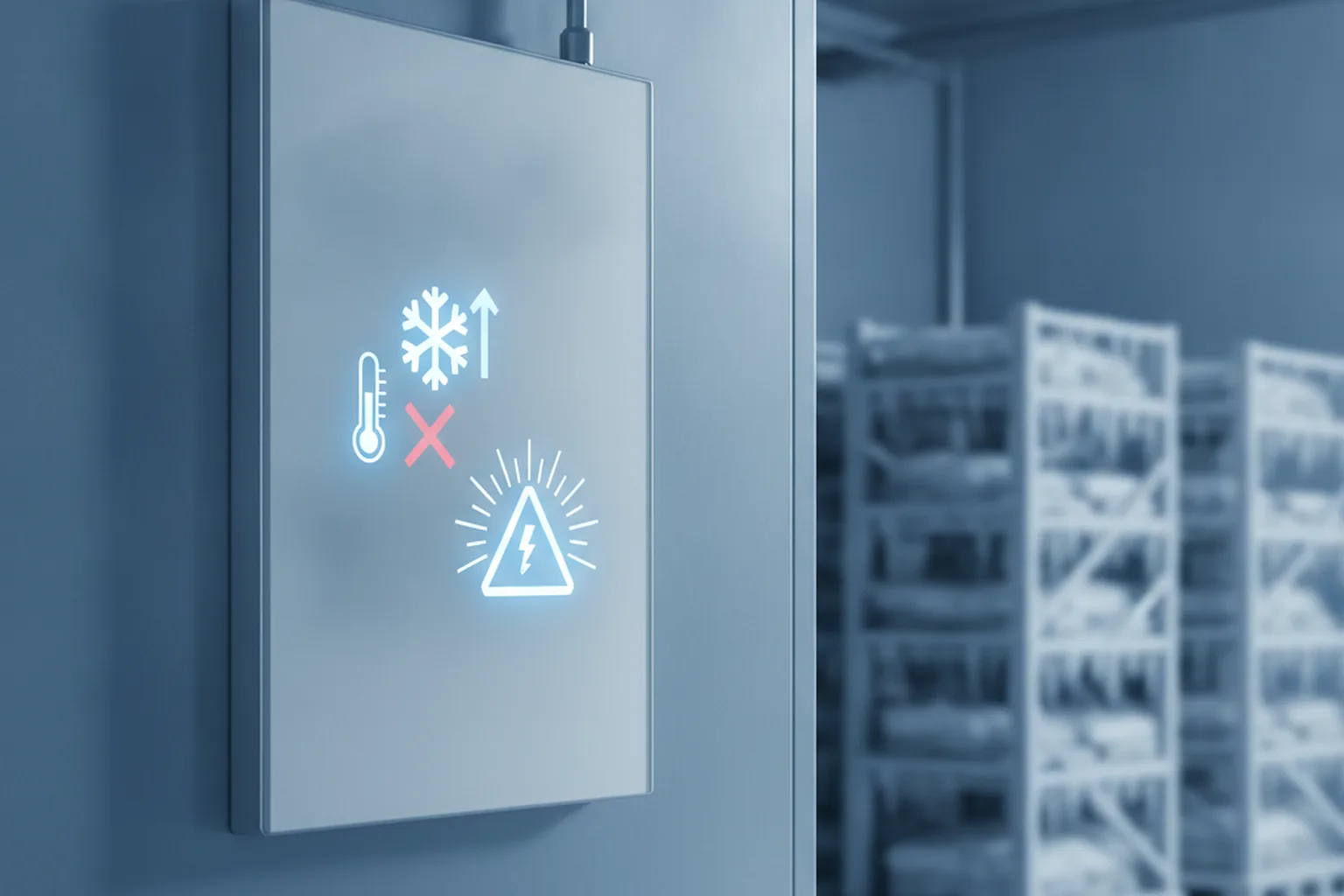
On November 5, 2026, CISA, the FBI, the Department of Health and Human Services, the USDA and the Department of Transportation published a joint fact sheet warning of ongoing cyber activity against industrial refrigeration and cold-chain monitoring systems. The agencies say the threat is active worldwide, not a single isolated incident, and that it can cause food spoilage, equipment damage and fire hazards across sectors that depend on controlled temperatures: food and agriculture, healthcare, chemical, and transportation.
What Happened on the Ground
The advisory follows a wave of real-world intrusions across the UK and Europe in the weeks before it was published. Several affected sites ran remote-controlled refrigeration units made by Danish manufacturer Danfoss, which had stopped shipping security updates for the older controllers customers were still running. On November 3, the French Blood Establishment (EFS) confirmed a cybersecurity incident had altered temperature and defrost settings at three facilities used to store blood products. That's not a theoretical risk; it's a direct hit on infrastructure that keeps blood products viable.
Cold-Chain OT Advisory — Key Facts
- Issued — November 5, 2026, by CISA, FBI, HHS, USDA and DOT jointly;
- Target — industrial refrigeration units and cold-chain monitoring controllers;
- Confirmed incident — French Blood Establishment (EFS), three facilities, Nov 3, 2026;
- Root cause pattern — remote-access controllers (e.g. Danfoss units) left internet-reachable, some past vendor support;
- Sectors at risk — Food & Agriculture, Healthcare, Chemical, Transportation Systems.
Why Does a Refrigeration Advisory Matter for the Rest of the Plant?
The pattern is the same one that keeps showing up across OT advisories this year: a remote-management feature, built for convenience, left reachable from the public internet with weak or default credentials and no vendor patches coming. Refrigeration controllers are an easy target because they are rarely treated as "real" industrial control systems — they get bought, installed and forgotten by facilities teams, not segmented and monitored the way a PLC on a production line would be. That blind spot is exactly what turns a routine HVAC-adjacent asset into a route for an attacker to disrupt a blood bank or a food distribution center.
What the Agencies Recommend
- Take remote-control interfaces off the open internet. Put refrigeration and cold-chain controllers behind a firewall, accessible only through a VPN or jump host with multi-factor authentication.
- Change default and reused credentials. Factory-set passwords for these controllers are widely published and routinely scanned for.
- Inventory and patch, or retire, unsupported units. If a vendor has stopped issuing security updates for a controller still in service, it needs a compensating control or a replacement plan.
- Treat cold-chain systems as OT, not building-automation afterthoughts. Fold them into the same asset inventory and network segmentation the plant already applies to PLCs and SCADA.
Turning "we know this is a risk" into an actual inventory of every internet-reachable controller, plus a segmentation plan that doesn't break operations, is usually a job for a team that specializes in information security audits for industrial environments. Most in-house facilities and IT staff have simply never been asked to map OT assets this way before.
Sources: CISA/FBI/HHS/USDA/DOT Joint Fact Sheet (Nov 5, 2026); TechCrunch.