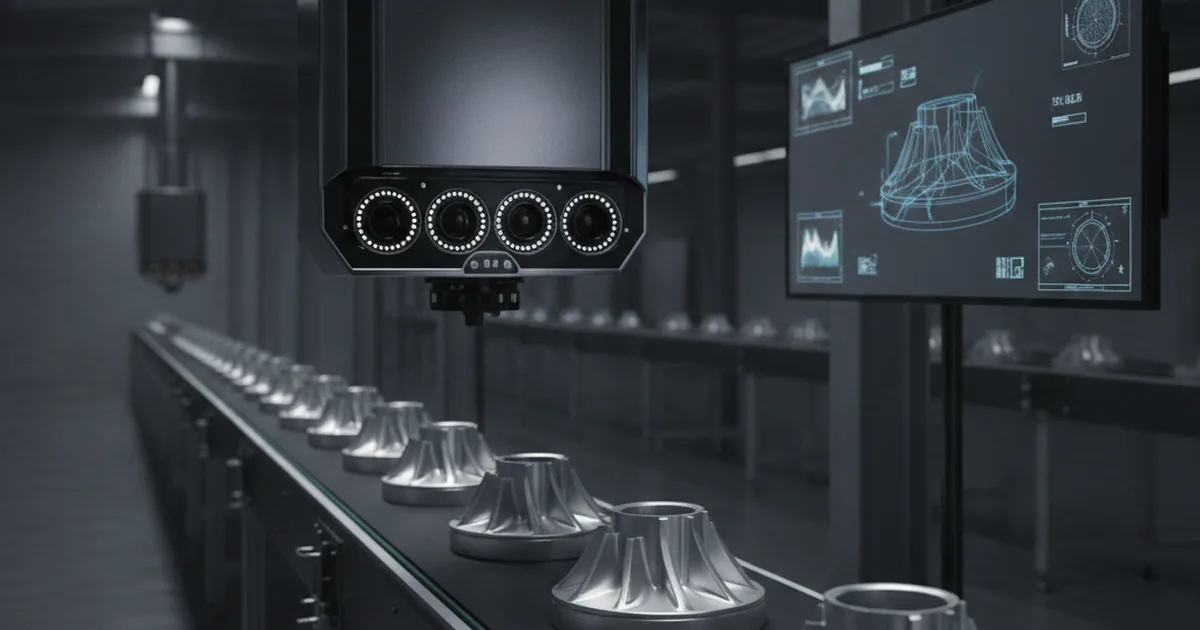
TL;DR: Computer vision quality control uses cameras and a trained model to flag defects at line speed, replacing or augmenting manual visual checks. The pipeline runs camera → model → edge decision → MES/SCADA logging. The real integration question isn't whether it catches defects — it's where inspection data lands once it's captured, and how it rolls out without stopping the line.
What Computer Vision Quality Control Actually Catches
Computer vision quality control is the use of cameras paired with a trained model to automatically detect defects, assembly errors, and dimensional deviations on parts as they move through the line. It typically covers three categories: surface defects (scratches, discoloration, cracks), dimensional issues (gaps, misalignment, missing fasteners), and assembly errors (wrong part, missing component, incorrect orientation). Each category tends to suit a different detection approach, which is why picking the right model matters more than picking the most expensive camera.
How the Inspection Pipeline Works
Regardless of vendor, the pipeline follows the same four steps:
- Capture. A camera with consistent, purpose-built lighting photographs the part at a fixed inspection point.
- Inference. A trained model scores the frame against learned defect patterns.
- Decision. An edge device turns that score into a pass/fail call fast enough to keep pace with the line.
- Integration. The result and supporting metadata are logged and pushed into the plant's existing systems rather than left in a standalone dashboard.
Classification, Detection, or Segmentation — Which Model Fits Your Part?
Classification answers "good or bad" for the whole frame — the cheapest option when a defect either exists or doesn't, with no need to locate it. Object detection, typically built on YOLO-class models, draws a bounding box around the defect and works well when you need to know roughly where on the part the problem is. Semantic segmentation traces the exact pixel boundary of a defect, which is the right tool when downstream decisions depend on defect size or shape, not just presence. A broader academic overview of where AI fits across industrial processes is available from recent research on AI applications in modern industries, useful context for scoping which approach matches your inspection task before you commit to a model.
Where This Fits Your Existing Line
None of this works in isolation from the stack you already run. Inference needs to happen close to the camera, not round-tripped to a distant cloud region, which is the same latency argument covered in our piece on edge computing on the factory floor — a defect decision that arrives after the part has moved past the reject gate is useless. The frames and metadata an inspection station generates also need somewhere to go for trend analysis and retraining, which is exactly the kind of structured destination described in our guide to building a manufacturing data lake, rather than sitting unused on a local drive.
There's also a human link in this chain that's easy to overlook: when the model flags a borderline part, the quality engineer on shift needs that alert on their phone at the line, not buried in an email digest hours later. That's a mobile-app problem more than a vision problem, and it's the kind of integration work a team that builds mobile applications for shop-floor operations handles routinely — connecting inspection alerts to the person who can act on them in the next thirty seconds. Finally, before scoping any of this, run the numbers through the KPI framework in our Industry 4.0 ROI metrics guide — a vision system that catches defects nobody was losing money on isn't worth the integration effort.
Rolling Out Without Stopping the Line
- Pilot on one station. Pick the inspection point with the highest known defect-escape cost, not the easiest one to wire up, and run the model alongside existing manual checks without acting on its calls yet.
- Validate accuracy against real line conditions. Compare model calls to human verdicts over enough volume to catch lighting drift, part variation, and seasonal changes before trusting it to make the reject decision alone.
- Scale station by station. Extend to the next inspection point once the pilot's false-reject rate and quality-escape numbers are stable, carrying over lighting and mounting lessons rather than relearning them each time.
Frequently Asked Questions
- What accuracy can computer vision inspection achieve?
- Accuracy depends on defect type, lighting consistency, and training data volume rather than one universal number; real-time inspection at line speed is the practical benchmark, improving as the model sees more labeled examples of your specific defects.
- Does this replace human inspectors?
- Rarely entirely. Most deployments shift inspectors from checking 100% of units by eye toward exception review — confirming flagged parts and handling the ambiguous cases the model routes to them.
- What's the typical payback period?
- Payback tracks the cost of the quality escapes you're currently catching late, not a fixed timeline — model the avoided cost of rework and warranty exposure before promising a date.
- Can it run on existing cameras?
- Sometimes, if lighting and resolution already meet the model's needs, but most retrofits still need dedicated lighting and precise camera placement at the inspection point.
Vision inspection only pays off once its alerts reach the edge decision, the data lake, and the person on shift fast enough to act — the model is the easy third of the project.
Sources: Ultralytics, How Vision AI Enhances Defect Detection on Production Lines; Oxmaint, AI Vision Inspection in Manufacturing; Techstack, Visual AI Reduces Defects, Boosts Manufacturing Yield; Svitla, Computer Vision for Real-Time Quality Control; Automotive Manufacturing Solutions, AI-powered vision shifts quality control from reactive to predictive.