
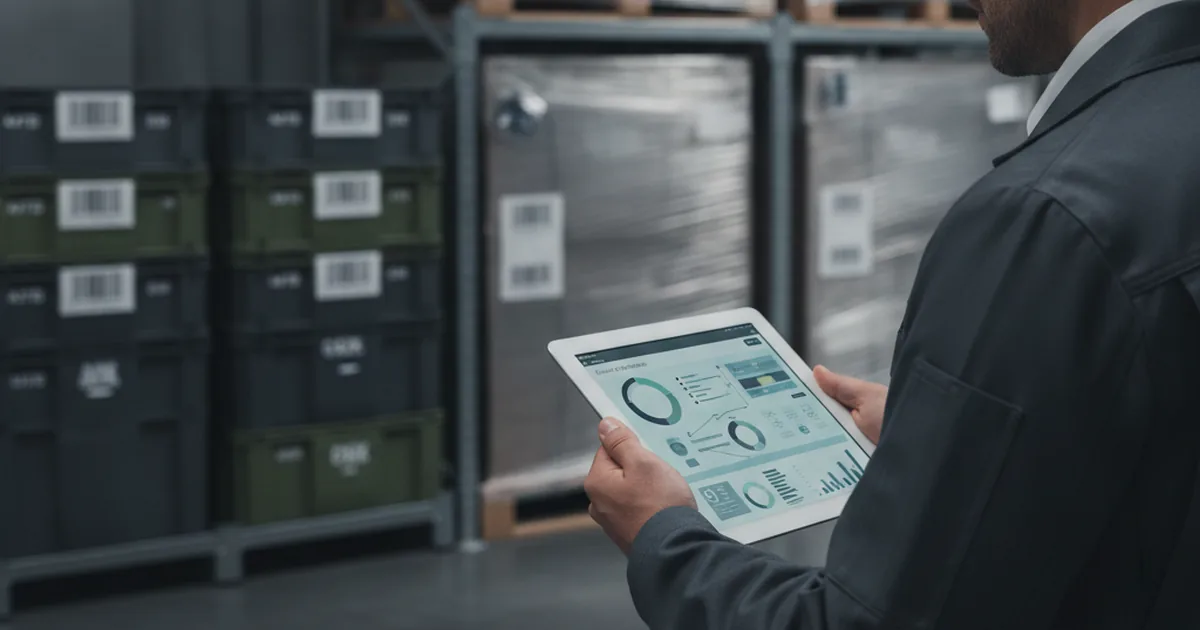
A manufacturing traceability system lets you reconstruct where a component or batch came from (backward) and where it went (forward) — the capability that turns a recall from a plant-wide guess into a precise, narrow pull. It underpins ISO 9001 and FDA documentation requirements, and it's almost always a custom or semi-custom build, because no two plants' batch genealogy looks the same. This guide covers the two directions of traceability, why compliance alone understates the value, a 5-step implementation path, and build-vs-extend tradeoffs.
A supplier substitutes a component mid-run, a sensor drifts out of calibration for a shift, or a single contaminated input makes it into a dozen finished lots — and the question every plant eventually has to answer under pressure is the same: which units does this actually touch? Without a traceability system built around your specific batch genealogy, the honest answer is often "we're not sure," which turns a contained issue into a much broader recall than it needed to be.
Standing up that kind of system from scratch is exactly the sort of project a custom-software partner like YuSMP Group takes on turnkey — from the data model that captures your specific batch and component relationships through to the operator-facing screens that make capturing that data part of the normal workflow, not an extra step people skip under deadline pressure.
This guide works through what a traceability system actually does, the difference between backward and forward tracing, why framing it purely as a compliance checkbox understates its value, a 5-step plan for implementing one, and how to decide whether it belongs inside your MES or as a connected module alongside it.
What Is a Manufacturing Traceability System?
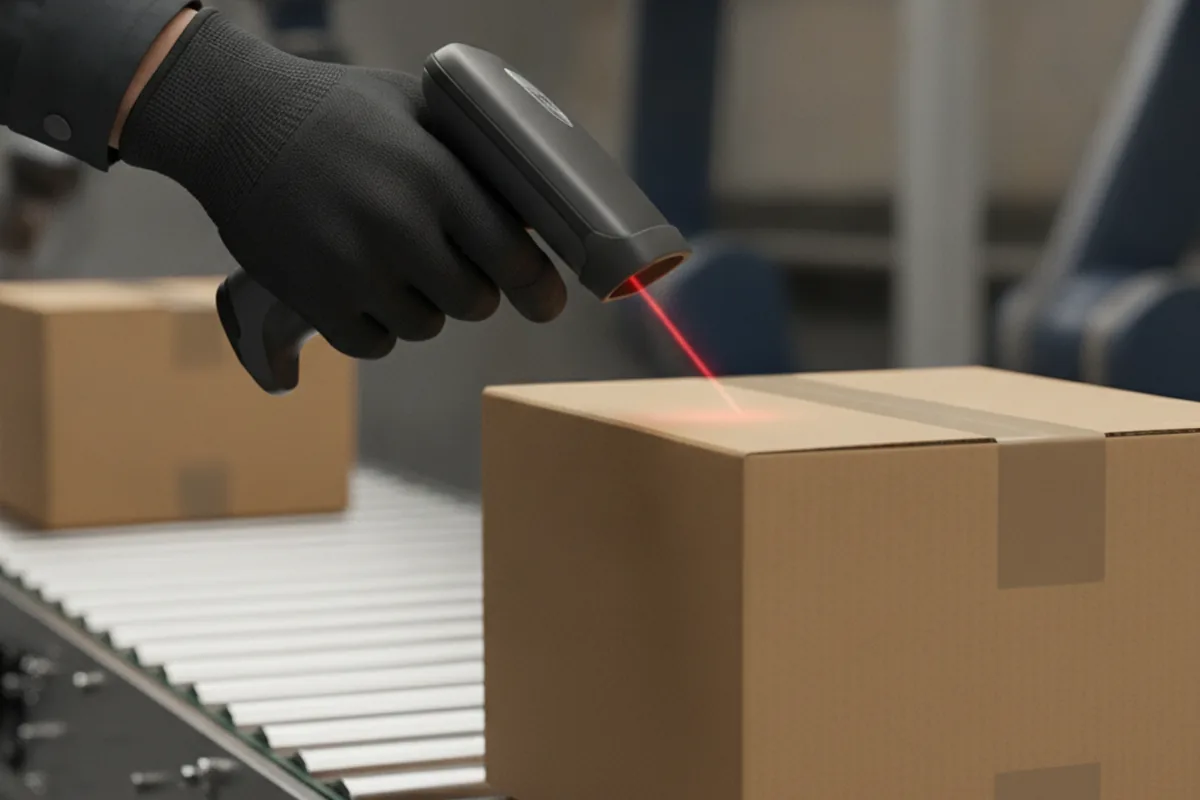
A manufacturing traceability system is the combination of capture (barcode, RFID, or serialization data recorded at each production step), data structure (how that capture data is linked into batch and component genealogy), and retrieval (the ability to query that genealogy fast enough to be useful during an audit, a customer inquiry, or a live recall). On its own, scanning a barcode at a station isn't traceability — it's just logging. Traceability is what that log becomes once it's structured so you can ask "what's in this finished unit" or "where did this lot ship" and get a precise answer in minutes, not days.
The practical building blocks are lot or batch genealogy (which raw-material lots and intermediate components went into which finished units), a consistent identification scheme — most commonly GS1 barcode standards, sometimes RFID — and an audit trail that ties capture events to timestamps, operators, and equipment. Quality management systems (QMS) and MES traceability modules both typically sit on top of this same underlying genealogy data.
Forward vs. Backward Traceability — Why the Direction Matters
Traceability runs in two directions, and most systems need to support both well, not just one.
Backward Traceability
Backward traceability answers "where did this come from?" Given a finished unit or an in-process batch, it reconstructs the chain of raw materials, components, and sub-assemblies that went into it — including supplier, lot number, and the date and shift it was received. This is the direction you need first when a quality issue surfaces downstream and you have to find its root in an incoming material or an upstream process step.
Forward Traceability
Forward traceability answers "where did this go?" Given a raw-material lot or a component batch, it reconstructs every finished unit it was used in, and from there, which customers, distributors, or shipments received those units. This is the direction a recall depends on: once you know a specific input lot is the problem, forward traceability is what lets you pull exactly the affected units instead of every unit that might plausibly be affected.
| Direction | Question it answers | Typical trigger | When it's critical |
|---|---|---|---|
| Backward | Where did this component or batch come from? | Defect found in a finished unit | Root-cause investigation |
| Forward | Where did this lot or batch end up? | Issue confirmed in an input lot | Recall scoping and execution |
Why Compliance Alone Isn't the Whole Story
Traceability is a documented requirement under ISO 9001's clauses on identification and traceability, and it shows up in sector-specific form in rules like FDA 21 CFR Part 11 for electronic records and signatures in regulated industries, and in pharmaceutical distribution under frameworks like the U.S. DSCSA. Plants that treat traceability purely as "what the auditor asks for" tend to build the minimum system that satisfies the letter of the requirement — adequate for passing an audit, but often too slow or too coarse-grained to actually narrow a recall or speed up a root-cause investigation when it matters.
Compliance documentation and operational usefulness aren't the same target, even though a well-designed system serves both. An audit trail built to merely demonstrate that records exist is a different design problem than a system built so an operator can look up a specific lot's full genealogy in under a minute during a live production issue. Plan for the second, and the first comes along with it — plan only for the first, and you often end up with records nobody can actually query fast when it counts.
How Fast Should a Recall Be?
The Takata airbag inflator recall remains one of the most widely cited examples in the industry of how traceability gaps compound a quality issue. Faulty inflators, in some cases linked to fatalities, led to one of the largest automotive recalls in history — and the scale and duration of the response were shaped in large part by how difficult it was to precisely map which inflator lots went into which vehicles across many manufacturers and years of production. It's a widely known industry example, not a traceability-system case study, but the underlying lesson generalizes: the faster and more precisely you can answer "which units does this affect," the narrower and less costly the resulting recall tends to be.
That precision is exactly what forward traceability is built to deliver. A system that can isolate the affected lot range in minutes, rather than requiring a broader recall because the records can't narrow the scope, is the practical difference between a contained quality event and a much larger one.
Beyond Recalls — Operational Payoffs of Good Traceability
Traceability earns its cost even in years when nothing goes wrong, through four recurring operational payoffs.
Faster Root-Cause Analysis
When a defect surfaces, backward traceability narrows the investigation from "somewhere in the process" to a specific supplier, lot, shift, or machine — cutting root-cause analysis from days of manual log review to a direct query. Traceability data pairs naturally with downstream quality tooling here; computer-vision-based quality control, for instance, benefits from traceability context because a defect flagged at inspection can be tied immediately to the exact batch and upstream inputs that produced it, rather than requiring a separate manual lookup.
Supply-Chain Communication With Partners
Suppliers and distribution partners increasingly expect lot-level traceability data as part of doing business, particularly in regulated or safety-critical supply chains. A plant that can hand a supplier precise lot and genealogy data when a quality question comes up resolves disputes faster and maintains more leverage than one that can only offer approximate date ranges.
Inventory and Workflow Optimization
The same genealogy data that supports a recall also supports better inventory decisions — knowing exactly which lots are oldest, which are tied up in which work orders, and where bottlenecks in work-in-process inventory are forming. Traceability data, once captured, becomes a byproduct input for broader operational visibility rather than a cost center that only pays off during an audit.
Reducing Waste and Rework
Precise genealogy limits quarantine and disposition decisions to the actual affected material instead of a wider precautionary hold. When a suspect component is identified quickly and narrowly, less good material gets scrapped or reworked out of caution, which is a direct, measurable cost saving independent of whether a formal recall ever happens.
How to Implement a Traceability System in 5 Steps
- Map the product and process genealogy you actually need to capture. Before picking any technology, document which relationships matter for your products — component-to-lot, lot-to-batch, batch-to-finished-unit — and at what granularity. This genealogy map, not the capture hardware, is the real design problem.
- Choose the capture layer that fits the line. Barcode and GS1 labeling cover most cases at lower cost; RFID earns its premium on high-speed lines, dense packaging, or harsh environments where line-of-sight scanning struggles. Match the capture method to the line's actual throughput and conditions, not to what looks most advanced.
- Decide what lives in MES vs. a dedicated traceability module. If your MES's data model already represents batch and component genealogy well, build traceability on top of it. If it doesn't, a connected but distinct traceability layer is usually less disruptive than retrofitting the MES's core data model — see the MES-ERP integration guide for how that connection typically gets structured.
- Build the audit and documentation trail compliance will actually ask for. Design the record format and retention policy against your specific regulatory requirements (ISO 9001, FDA 21 CFR Part 11, or sector-specific rules) from the start, rather than retrofitting documentation onto a system that wasn't built with an audit in mind.
- Pilot on one line before plant-wide rollout. A single-line pilot surfaces where the genealogy map was wrong, where operators route around the capture step under time pressure, and where the data model needs adjustment — all at a scale where fixing it is cheap, before the same gaps get replicated plant-wide.
Build, Buy, or Extend Your MES?
Because almost no two plants share the same batch genealogy, component relationships, or regulatory documentation format, off-the-shelf traceability tools tend to need significant configuration — and in many cases, custom extension — to fit a specific line. That's the same build-vs-buy tension that shows up across manufacturing software generally; our custom MES build-vs-buy framework walks through the broader decision in more depth, and most of that reasoning carries over directly to traceability: the less standard your process, the stronger the case for a system built around your actual data model rather than bent to fit someone else's.
FAQ
- What's the difference between traceability and track-and-trace?
- Track-and-trace usually refers to the real-time capture layer — scanning barcodes, reading RFID tags, logging serial numbers as items move through a line. Traceability is the broader capability that result feeds: the ability to reconstruct where a batch or component came from and where it went, using the data track-and-trace captured. You need track-and-trace to get traceability, but traceability also covers the documentation, genealogy records, and audit trail built on top of that raw capture data.
- Do I need RFID, or is barcode traceability enough?
- Barcode and GS1-standard labeling cover most manufacturing traceability needs at a lower cost and with simpler hardware. RFID earns its higher cost when items move too fast or are too densely packed for line-of-sight scanning, when you need bulk reads of many tagged items at once, or when tags need to survive harsh environments that damage printed labels. Most plants start with barcode traceability and add RFID selectively on the lines where scanning throughput actually becomes a bottleneck.
- How long do traceability records need to be kept?
- Retention periods depend on the regulatory framework and industry your products fall under, and they vary — some run several years, others track the expected lifetime of the product plus a margin. There's no single universal number. Confirm the applicable requirement for your industry and jurisdiction directly, and build your traceability system's data-retention policy around the longest requirement that applies rather than a generic default.
- Can traceability be bolted onto an existing MES, or does it need a separate system?
- Both approaches work, and the right one depends on how your MES already models batches and genealogy. If your MES's data model already captures lot and component relationships cleanly, a traceability module built on top of it is usually the faster, lower-risk path. If the MES wasn't designed with that genealogy in mind, retrofitting traceability often means extending or partly rebuilding the data model — at which point a dedicated traceability layer, integrated with the MES rather than bolted into it, tends to hold up better long-term.
- What's the biggest mistake manufacturers make when implementing traceability?
- Capturing data without mapping it to the genealogy you'll actually need during a recall. Plants frequently scan barcodes and log serial numbers at every station, generating a large volume of data, but structure it in a way that makes it slow or impossible to answer the specific question an auditor or recall investigation asks: which finished units contain this specific component lot. Capture layer and genealogy structure have to be designed together, not bolted on after the fact.
- How does traceability affect recall cost?
- Precise traceability narrows a recall to the specific lots and units actually affected, instead of forcing a broader recall across a wider date range or product line because the records can't isolate the exact scope. A narrower, faster recall generally means lower direct costs (fewer units pulled, less replacement inventory) and less disruption to customers and distribution partners than a recall that has to err on the side of over-inclusion because the traceability data isn't precise enough to narrow it.
Traceability data overlaps directly with defect detection — see our guide to AI-based computer vision for quality control for how inspection data and batch genealogy work together to speed up root-cause analysis. And for the integration layer that connects traceability and MES data to the business systems above it, our MES-ERP integration guide covers the data that actually needs to move between the two.
Key Takeaways
- Traceability means both backward tracing (where a component came from) and forward tracing (where a batch went) — most systems need both directions, not just one.
- Compliance (ISO 9001, FDA 21 CFR Part 11) sets a documentation floor, but a system built only to pass an audit is often too coarse to actually narrow a recall fast.
- Precise forward traceability is what keeps a contained quality issue from becoming a much larger recall — the Takata airbag case illustrates the scale of the alternative.
- Genealogy mapping, not capture hardware, is the real design problem; pick barcode or RFID to fit the line's actual conditions, not the other way around.
- Because batch genealogy rarely matches a vendor's standard schema, traceability systems are almost always custom-built or custom-extended rather than bought off the shelf as-is.
Planning a traceability system built around your plant's actual batch genealogy? Discuss Fixed-Price Turnkey Development →